
A growth mindset: the best conditions in which to PLANT
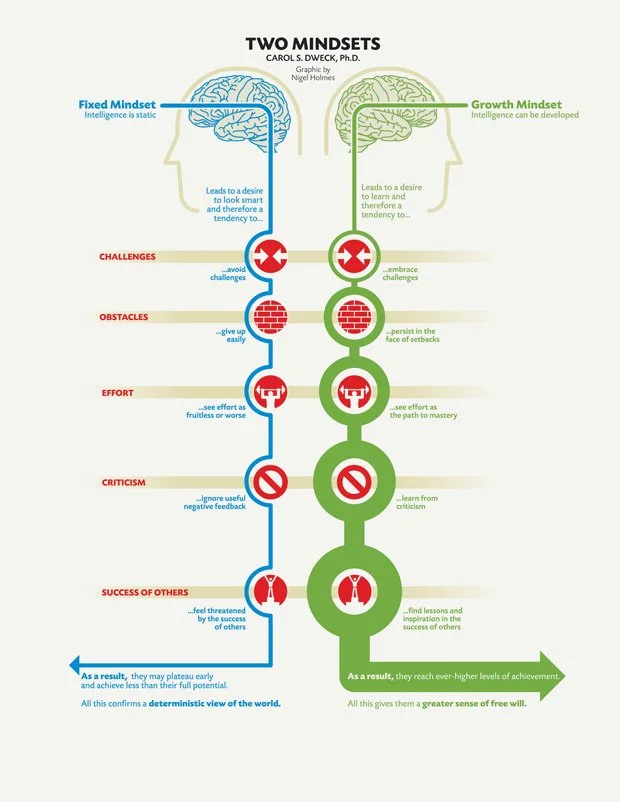
“Those with the growth mindset found setbacks motivating. They’re informative. They’re a wake up call.”
PLANTING new habits takes the right conditions for the habit to grow. Just like seeds we PLANT this month will need the perfect conditions for germination.
Carol Dweck’s groundbreaking theory on ‘Growth Mindset’ has many facets. In different ways, she explores our relationship to effort, success, and our (natural or learned) abilities. The subheading of the book is ‘How you can fulfil your potential’. It feels pertinent to the idea of setting in motion new ways of thinking, feeling and being.
I am going to focus on one element in particular, which as we get older (more responsible, possibly more set in our ways) we often overlook and loose sight of - which in turn can limit us and what we choose to do in the world.
It is the concept of failure. And I want to test our thoughts and feelings about it here.
Often in coaching, I come across people who have aspirations (they can see their potential), but are too afraid of failing to even start. It may be a perfectionist streak that limits them; it may be because it flies in the face of what other people think is ‘good’ or ‘right’ for them. The fear of failing can limit our potential in the world, it can hold us back - often so much that we put our aspirations in a box somewhere and forget all about them. (Much easier.)
But where did we arrive at the idea that “to fail” = something bad?
As we know well from watching our children try and try and try again at something - probably encouraged by you, their adoring parent - getting things wrong is an inherent part of learning and development. At what point in our lives do we decide that for us, that’s not the case and that we should only attempt something we know we can be successful at?
This feels to me like the death knell for ‘life long learning’, or indeed the scope for creativity, innovation and the development of new ideas and skills. What a boring world that would be!
And we often learn that failure is bad in schools - the very establishments set up to create opportunities and enable people! Instead a rich diet of ‘do better’, ‘improve’ and ‘reach that expected goal’ can leave us feeling that if we get things wrong - it will be difficult, onerous, dangerous. We might be left behind. We might be laughed at. There’s not enough time for getting things wrong at school.
Some coaching questions to consider…
So, assuming that our ideas about failure are often formed at such influential times in our lives - what have you learned about what it feels like and looks like to get things wrong - to fail?
What sorts of experiences have taught you about failure?
What sorts of emotions and thoughts do you have about what it is like to fail or to not reach the expectations of others - or to not reach the potential you thought you had?
What needs to change so can you develop a growth mindset - where failure is necessary to growth and development - so that you can embrace failure as, in some way, useful?
And now more specifically:
If you knew you COULD NOT FAIL, what would you do more/less of?
If you knew that it would be APPROVED OF, what would you do more/less of?
If you knew you could generate enough MONEY (and other forms of security), what would you do more/less of?
What can you bring to our group session, that explores your own potential - and the questions you may have about whether you will succeed or fail?
The podcast below is a great introduction to Carol Dweck and Growth Mindset, if you are interested in finding out more. I have not been able to embed the audio, but click on the image or follow the link in the caption below.
Click on the image to take you to BBC Sounds, or follow https://www.bbc.co.uk/programmes/b062jsn7