
What is most important to me?

Photo: John Moeses Buaun @ Unsplash
According to both Kate Northrup, Oliver Burkeman - and the field of positive psychology from which Coaching is born - it helps to know what is most important to us, if we are to effectively organise our life in any meaningful and practical way.
The question of what to PRUNE - to cut back on - becomes quite different when we move from expecting to have to let go of, be deprived of, or have less of something - and towards making time for what is most important to me.
The acknowledgment from both authors mentioned above is that life and society have brainwashed us into thinking we are unlimited creatures, and unlimited choice is in some way helpful to us. It is not.
The reality is we are limited - in time, in energy and in resource. The sooner we all recognise this, the greater scope for meaningful fulfilment there is. So know what is important to us - and using this as a filter - can be a useful tool.
Our Values
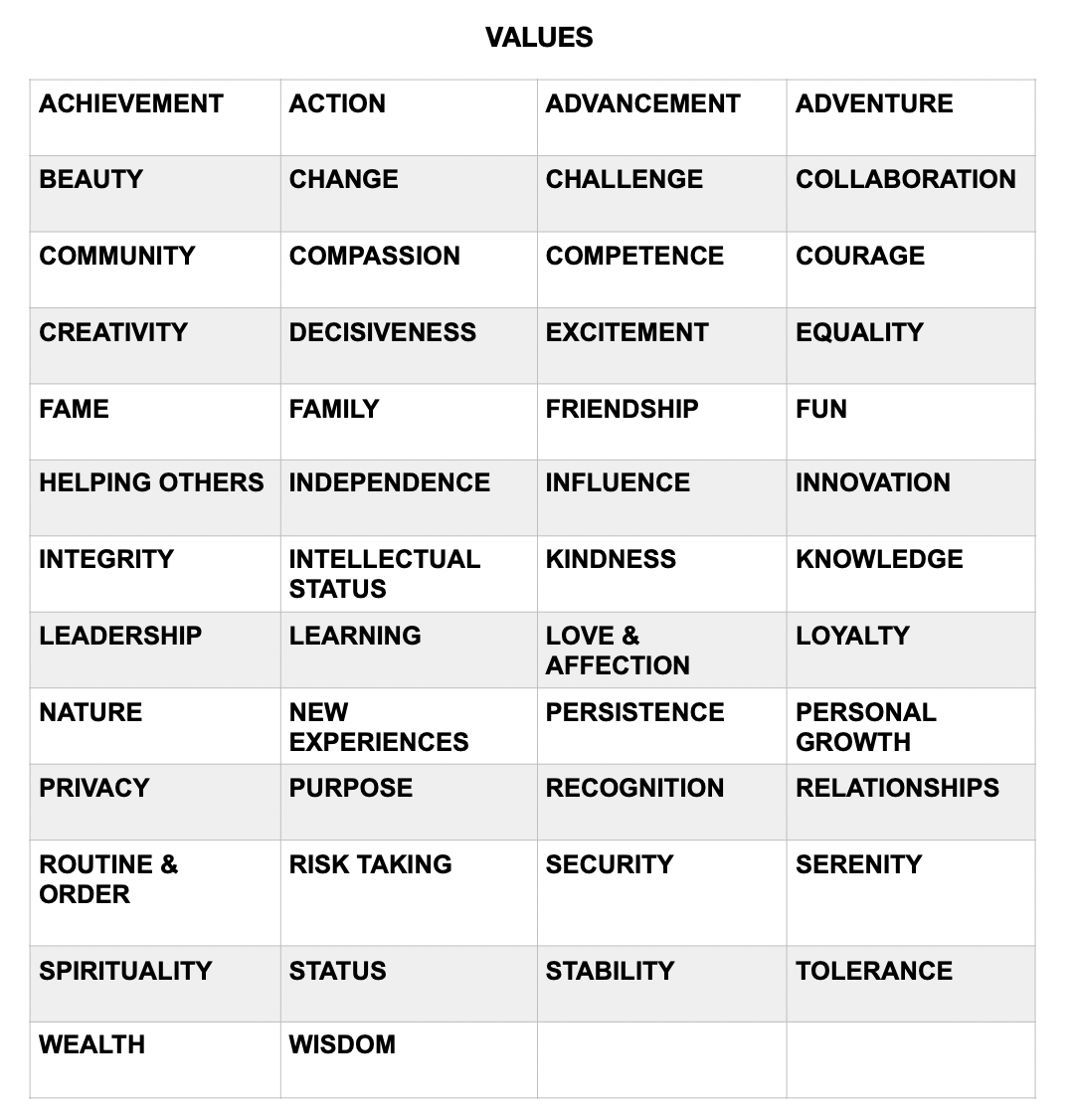
A good place to start is our Values - those qualities or concepts that help us answer the question ‘What do I stand for?’ or even, ‘What do I most respect and admire in others?’ Below is a list of Values you might like to choose from.
Choose as many as you like - then can you whittle your list down to your top, or most significant 5?
So what?
Having identified your values - how can they be useful to you, in working out what is most important to you?
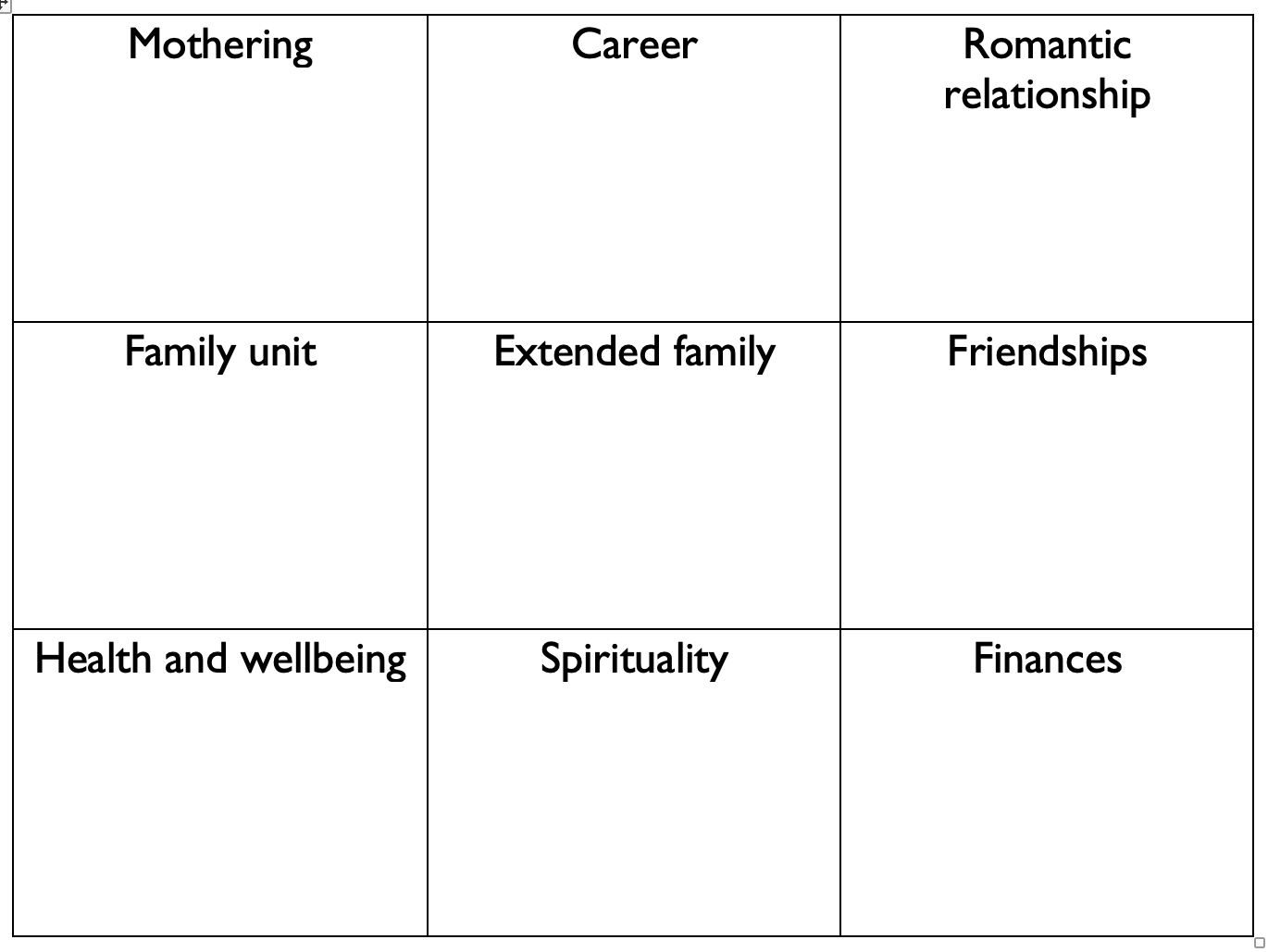
Below is a grid, identifying the most commonly important things to most people. Your grid might look a bit different - but will probably have some commonalities. If you are not sure, use this grid to begin with and see what else might need adding.
A little like the wheel of anything - this activity asks you to look across your life and see the parts that make up the whole. There is inevitable overlap. The compartmentalisation might indeed feel clunky. But it can be a way of discerning some more refined or granular detail that could become useful in practice.
Have a look at this grid and create your own. Include things that are important to you - and add your own if they are not represented here.
Having identified those areas of your life most important to you, start representing where your values show up in action. Jot down in each box where your values are present in your thoughts, feelings and behaviours.
I have used different colours to represent how my values are represented across different areas of my life, and it makes me think how active they are - even subconsciously - in helping me decide what I do, or don’t do, on a daily basis.
Now what?
Having identified our values, and started to place them meaningfully in these boxes of our life - how could this inform what we choose to prune this month?
How do we use this grid as a benchmark for what stays and what goes?
If this grid represents what requires your best focus and energy, what needs cutting back, letting go of or removing indefinitely?!
How will your thinking inform your actions and choices?
I’m looking forward to discussing your own interpretation of this - and how it might help you to cut back, make space for, or help new growth appear.