Decluttering: pruning our stuff
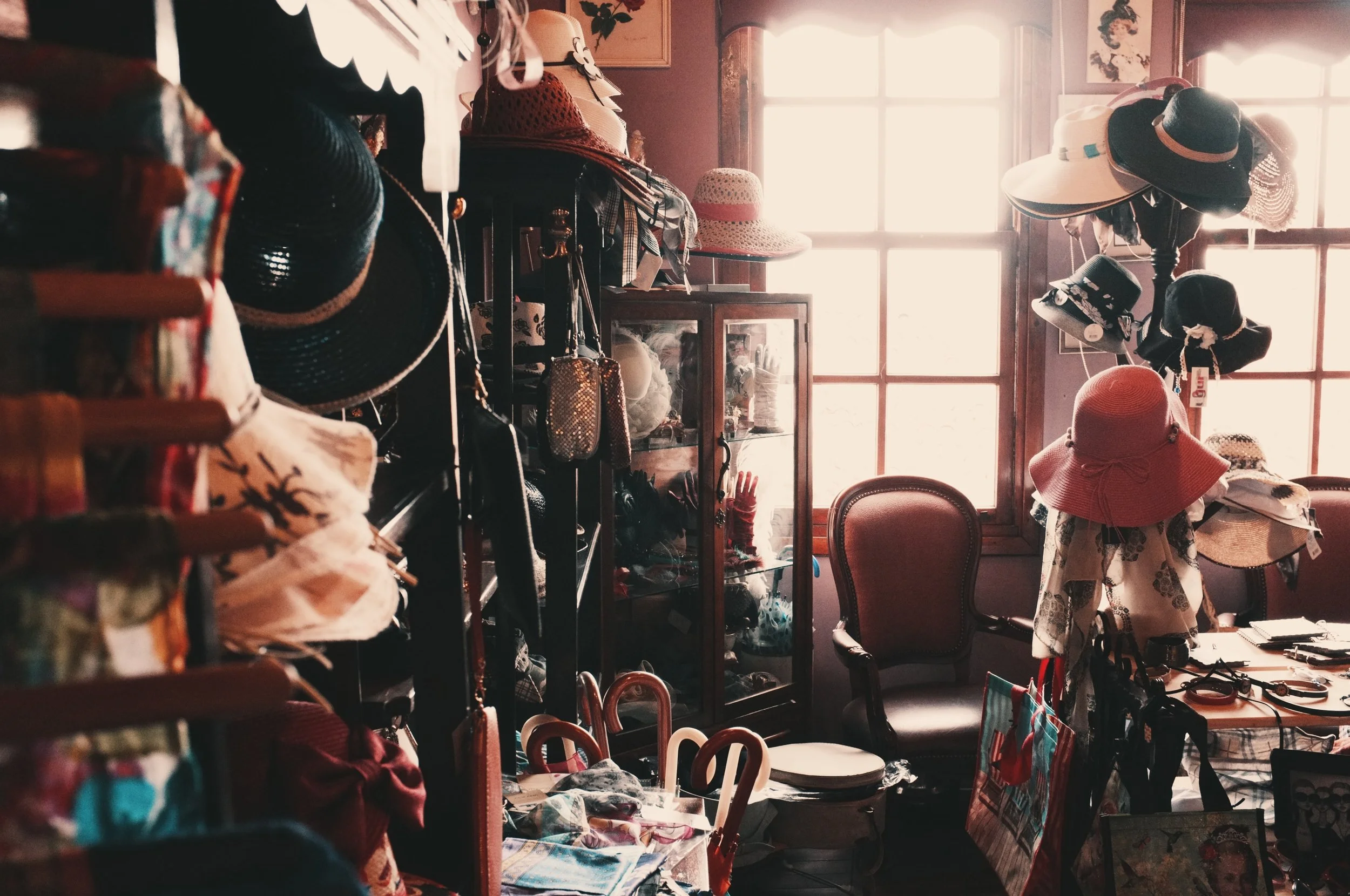
Photo: Onur Bahcivancilar @ Unsplash.com
Pruning the ‘stuff’ around us
This, for me, is most definitely a work in progress; and traditionally, reserved for the ‘spring clean’ in your home during the spring months. I don’t want you to get any funny ideas that I myself am on top of this process. I am learning too. And I look forward to finding out more about how you go about getting rid, chucking out, letting go and passing stuff on to others. Small wins. Progress is progress, as we say in our home.
What I’m realising (some might say, a little too late in life…!) is that ‘pruning’ is a very different exercise to ‘cleaning’ – it is the art of letting go. By letting go, we get more room to breathe, choose and make space for novel and more important objects or activities in our lives.
Pruning, as we are exploring this month, allows for healthier growth down the line – it protects us form toxic or diseased features of our current existence, and puts us more in charge of our choices and what we have around us.
Taken from a range of sources this month, I am seeking wisdom in what it means to declutter: to throw away, cut back, give away or pass on to someone else. To prune.
The Benefits of Decluttering Your Life
(Source: https://www.becomingminimalist.com/creative-ways-to-declutter/)
There are many benefits to owning fewer possessions. Even then, it’s tough to move into action. That is… until the many benefits of getting rid of clutter reveal themselves:
Less to clean. Cleaning is already enough of a chore but having to clean around things you have zero emotional attachment to (or worse, actively dislike) makes cleaning the house much more stressful.
Less to organize. Finding things suddenly become easier. Things don’t just “disappear” anymore. You can actually move around your home and enjoy the space, instead of moving around things that are in the way.
Less stress. Looking around at the clutter is a nausea-inducing sight once your home becomes cluttered enough. Wouldn’t it be nice to be able to look around and see a home you love?
Less debt. Spending less time shopping for material possessions and adding to the clutter means your wallet and bank accounts remain fuller, your credit cards’ statements are lower, and your home doesn’t get filled with costly things you don’t need.
More financial freedom. Decluttering, paired with minimalism, will help you build up savings to keep you protected in case of unexpected emergencies.
More energy for your greatest passions. With less debt, more financial freedom, and a clean home, you can now focus your energy on the things you enjoy instead of worrying about “keeping up with the Joneses.”
So, where do you begin?
10 Creative Decluttering Tips
If you’re struggling and need guidance on how to declutter, you’ll need to get creative with your plans. Here are several interesting decluttering tips to get you started on decluttering your home:
· Start with 5 minutes at a time. If you’re new to decluttering, you can slowly build momentum with just five minutes a day.
· Give one item away each day. This would remove 365 items every single year from your home. If you increased this to 2 per day, you would have given away 730 items you no longer needed.
· Fill an entire bin bag. Get a bin bag and fill it as fast as you can with things you can donate to a charity shop.
· Donate clothes you never wear. To identify them, simply hang all your clothes with hangers in the reverse direction. After wearing an item, face the hanger in the correct direction. Discard the clothes you never touched after a few months.
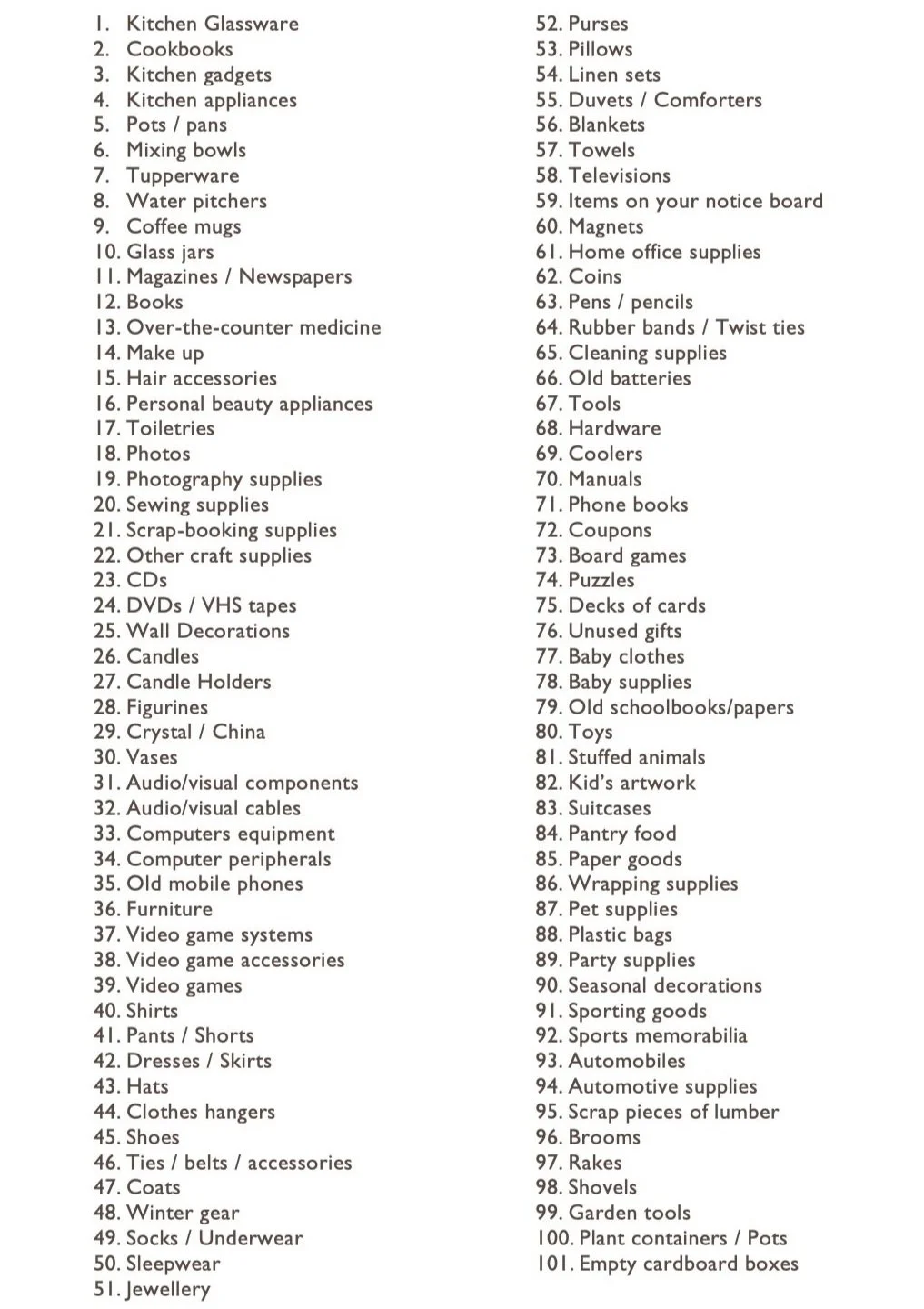
· Create a decluttering checklist. It’s a lot easier to declutter when you have a visual representation of where you need to get started. See below for a checklist.
· Take the 12-12-12 challenge. Locate 12 items to throw away, 12 to donate, and 12 to be returned to their proper home.
· View your home as a first-time visitor. It’s easy to “forget” what your home looks like to a new visitor. Enter your home as if you’re visiting the home of a friend. Write down your first impression on how clean and organized the home is and make changes.
· Take before and after photos of a small area. Choose one part of your home, like your kitchen counter, and take a photo of a small area. Quickly clean off the items in the photo and take an after photo. Once you see how your home could look, it becomes easier to start decluttering more of your home.
· Get help from a friend. Have a friend or family member go through your home and suggest a handful of big items to throw away or give to someone else. If you defend the item and want to keep it, your friend has to agree with your reason. If they don’t agree, it’s time to get rid of it.
· Use the Four-Box Method. Get four boxes and label them: rubbish, give away, keep, or re-locate. Enter any room in your home and place each item into one of the following boxes. Don’t skip a single item, no matter how insignificant you may think it is. This may take days, weeks, or months, but it will help you see how many items you really own and you’ll know exactly what to do with each item.
Other inspirations
The Minimalists
https://www.theminimalists.com/
One newsletter I do open every now and again is from The Minimalists – and they also have a podcast. It is a gentle and (sometimes!) funny reminder about how and why to keep our spaces more in our control. They tackle more emotional aspects of keeping our clutter under control, and even discuss the art of things like writing – editing being a process of stripping back, keeping words lean.
Here's a flavour of their schtick and a 6-minute idea I hadn’t thought of before…
Marie Kondo
I am smirking to myself as I write this – as it has become a bit of a running joke between me and my partner that he wishes I was ‘just a little bit more Marie Kondo’. I’m the untidy one (or so he claims…) with years of built up, sentimentally kept, ‘stuff’ that has followed me around during the many moves throughout my life. (To be fair, he is no minimalist himself – but hey, the prompt to scale back what I own is definitely one I need.)
Her top tip question is ‘does it spark joy?’ which, while useful, feels a bit ludicrous to me… does my very effective spatula spark JOY exactly? Not sure. But it’s a start, a filter.
Here are some other tips to get started with the queen of the declutter:
Start with Gratitude
Kondo points out that tidying up is the process of “identifying the things that make you happy”. But first, we have to say goodbye to negativity and scurrying through cleaning. According to the KonMarie method we need to respect our belongings because they have served a purpose in our lives. So, accept that this process may take a while and start with these basics:
Organise by category and not by room
Do simpler categories first. Kondo suggests beginning with a large category like clothing then dividing it into subcategories like shoes, shirts etc. Apply the same principle to books, papers, miscellaneous, and tackle sentimental items last. Check out Lisa Tselebidis’ helpful category list and her KonMarie checklist.
Pick up every item
You need to touch each piece you own to find if it “sparks joy”. Keep it if it’s making you feel giddy, but if it doesn’t, thank the item for its service and add it to the donate box.
Respect what you own
Disregard leads to clutter and may affect other areas of your life. So, to respect your belongings try to understand that each object has served you in some way. As you work through your possessions, find/create a home within your home for each piece so that everything has its place.
Don’t assume
We delay the tidying process when we assume we’ll revisit something later. Deal with what is in your organising pile now. Don’t store objects, however sentimental they may be, just for the sake of keeping them. Either find a way to celebrate these items, preferably on an open shelf, or move on.

Declutter Checklist: 101 items in your home to sort through and give a home to
Source: https://www.becomingminimalist.com/101-physical-things-that-can-be-reduced-in-your-home/