
The context for change
Just like seedlings might have to suffer the frost if they pop up too soon - or heavy rainfall, freak winds or unexpected sunshine - the conditions we emerge into will help determine what our experience will be. As we navigate change, however small or subtle, how will the context affect the progression or outcome of our change?
This week, I am going to share some thinking, some tips, and a video or two from the work of Stephen Covey - much lauded writer, who wrote The Seven Habits of Highly Effective People. These habits are patterns of thinking and acting that represent a broader approach to life. Collectively, Covey’s seven habits help you to examine and adjust your character, your motives, and how you see the world in order to become more effective both personally and professionally.
Take Initiative
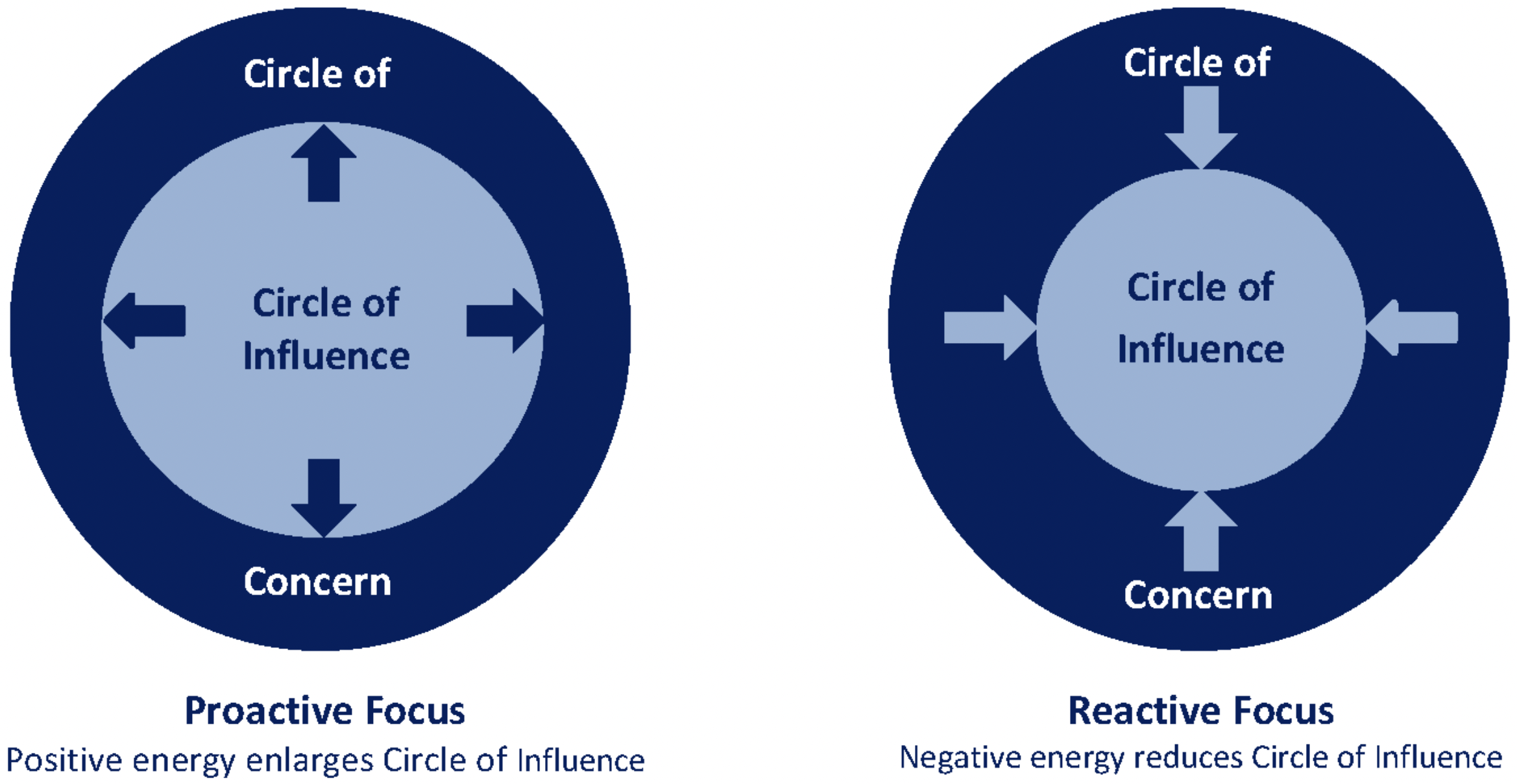
The first habit is to Take Initiative. And in explaining this habit, Covey describes two particular Circles - seen below - the Circle of Concern and the Circle of Influence. Everything that sits within the Circle of Concern are all those things important to you - things you are concerned about - from ‘what’s happening in the world?’ to ‘what are we having for dinner?’
Inside the Circle of Concern sits the Circle of Influence - those things you are concerned about that you can affect. And these concentric circles describe the context in which you are trying to grow - a context defined by things IN your control (things you can influence), and things OUT of your control (things you can’t).
For example, you might be worried about what the government is going to do about the economy. This would fall under the Circle of Concern. It's something that you're worried about but can't do much about.
On the flip side, if you're worried about a big work project you have to get done, that would fall under the Circle of Influence. It's something you are concerned about that you can directly address through action.
Of course, you shouldn't ignore an issue just because it's out of your control, but, Covey argues, you can alleviate some anxiety by focusing your energy on what falls directly inside your Circle of Influence.
Reducing the overwhelm
According to Covey, when we are fixated on things out of our control, and when we are preoccupied by their impact on us, it can contribute to our anxiety levels rising. We can feel overwhelmed. The negative energy of being in reactive mode causes distress.
Instead, it’s really a matter of perspective.
If you attend to the things that sit in your Circle of Influence, you can feel in control, take action and have impact. But first, Covey writes that changing your behaviours requires you to change your paradigms. These perspectives impact how you interpret situations, and your interpretations dictate your behaviour; thus, changing your perspective changes your behaviour. Taking this a step further, your behaviours determine your outcomes, which collectively shape your life.
So, as we initiate change - as we begin to emerge - we must be resourced and open to changing our perspectives. We must stay curious and alert to the beliefs and assumptions that might hold us back. We must pay close attention to what IS in our control - to be able to sit comfortably in the Circle of Influence, and watch it expand as we do so.
Proactivity
Effective people, according to Covey, are empowered to choose their thoughts and actions. They do not let the context they are in dictate their decisions and actions. In relation to Daniel Pink’s theory about intrinsic motivation, this proactivity contributes to that important sense of autonomy - a key pillar in a fulfilled and motivated life. And so that Circle of Influence grows as you generate and cultivate proactivity.
So as you emerge, as you begin to navigate change, the key take away here is to remain proactive - to keep taking the initiative and working on things that you can influence and control - and putting less importance on all that you cannot influence or control. It is a virtual cycle that can only benefit and generate positivity.
How to work with your Circle of Influence
In order to feel in control of your context, and to be proactive within it, below are some simple tips or suggestions to practice before we meet in the group coaching.
Make a list of your concerns: taking two circles - one inside, one outside - start to jot down those concerns that feel out of your control or influence, and those things that feel like you have the opportunity and capacity to influence or impact. For example, the weather next week for my camping trip looks dreadful (Circle of Concerns) but how I resource myself for that weather is something I can make a choice about and prepare for (Circle of Influence).
Pay attention to your emotional cues: Is there anything on your Circle of Influence list that is creating burnout or exhaustion? Whilst it might be in your control, does it make you feel depleted or resentful? "These emotions are cues for you to slow down and examine whether what or who you're trying to influence is actually responding to the influence. If you cannot find any evidence that your efforts are leading to incremental change, it may be worth reorganising your approach to influence or putting your efforts elsewhere." (Justine Grosso)
Take focused action: you might use the Wheel of Everything (January resources) to identify what areas of your Circle of Influence need attention - and what one thing you could do to change your situation. You can take action, feel in control, and reduce overwhelm by increasing proactivity - but on things that you can control, and you know will have a desired impact. The additional benefit of proactivity in this way is that by taking action, and working out step by step whether it is the right action, your confidence to take further action grows.
The Circle of Influence encourages us to focus on what small actions we CAN take, rather than being preoccupied by the feelings of being stuck or overwhelmed. The more we pay attention to incremental changes within our reach, the more confidently we emerge.