
Cast of Characters
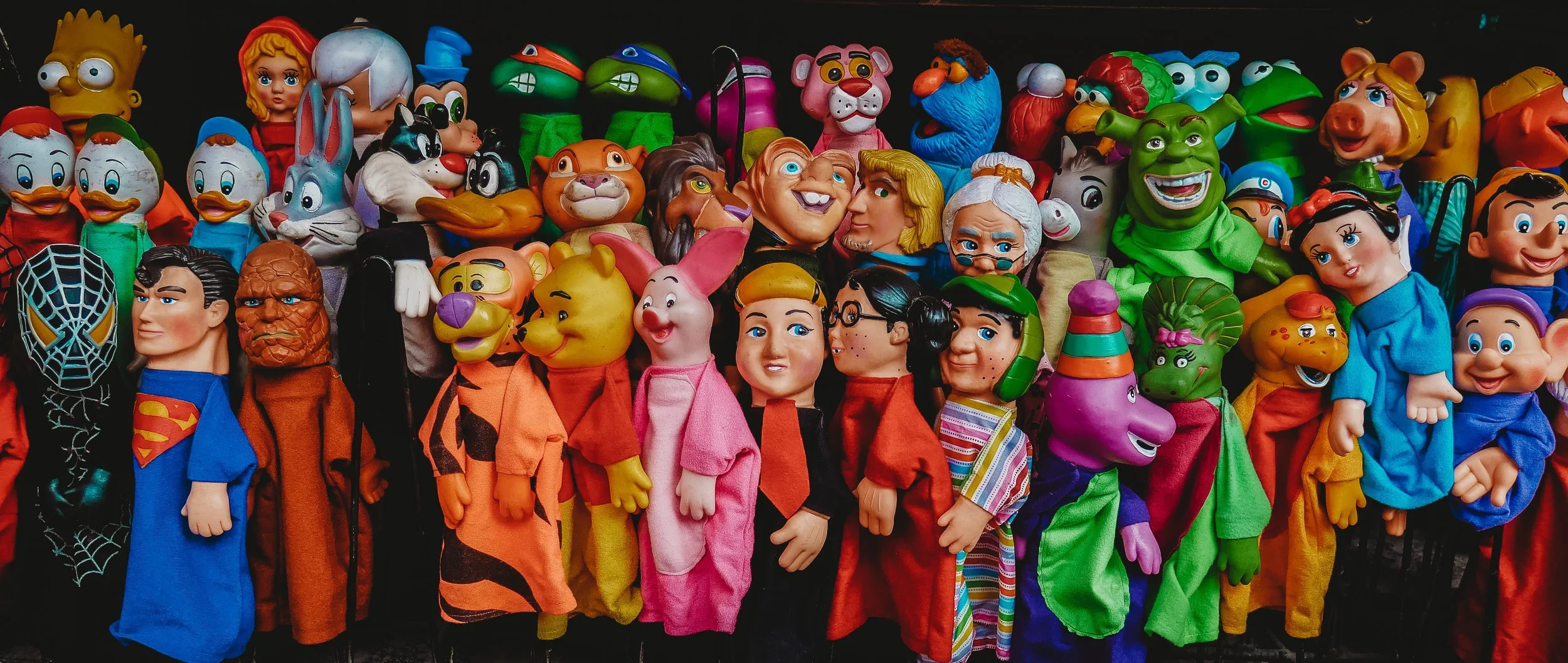
Photo: Roberto Carlos Román Don @unsplash
As we think about what we might want to invite this month, there may be particular parts of ourselves that deserve some time in the sun: our relaxed selves, our playful selves, our holiday-mode selves. It can be easy for other parts of ourselves to dominate our day-to-day - the internal critic, the parent, our anxious voice.
It can often be these parts of ourselves that get in our way or even sabotage our progress. This activity allows us to acknowledge and notice those parts of ourselves that might do just that - especially when another part of ourselves is calling. And in our day to day, there will be positive ‘characters’ too - the Inner Wise Sage (see Tara Mohr’s book ‘Playing Big’ ), the Cheerleader, the Risk taker.
When we think about the inner landscape that we all have - we can sometimes describe this in terms of the ‘voice in my head that....’ almost personifying the voice as a character.This idea shows up in psychology too: psychologists talk about the ‘Community of Selves’ that make up an individual. A model called Internal Family Systems in fact describes the various ‘family members’ we have that make up the whole of who we are.
Neurolinguistic Programming (NLP) talks about the different ‘parts’ of each of us. Perhaps we can all recognise different parts or ‘characters’ in ourselves.And anyone who has watched the Pixar film ‘Inside Out’ may enjoy seeing this idea brought to animated life.
Given we are thinking about who, or what, to invite in this month, let’s play with this idea for a moment, using a metaphor:
Imagine you have a whole stage of players, a cast of characters that make up who you are. Your cast may consist of Positive Patsy,Anxious Annie, Gung Ho Gladys, Sad Sal, Imposter Iris ..... you get the idea!
You are made up of more than one solo performer.
All your cast members have a role to play and are important. Certain players can tend to hog the limelight and be at the front of the stage too much in an unhelpful way.There are other members of the cast at the side or the back of the stage, behind the limelight or in the wings.
So it is not about dispatching someone off the stage, never to return. Rather it is about accepting each of them in all their richness - learning to choreograph a complex play which allows the most appropriate cast members on stage and in the spotlight at the appropriate time, nurtures each cast member, holds them back or brings them forward as need be, so that the sum of the parts is much richer and greater than each individual part.
For example: If ‘Anxiety’ is a character in your stage of players - it is not about pushing her or him off the stage completely.Anxiety can serve a useful purpose - helping us to assess risk, keeping us safe. How much does she need to be ‘ on the stage’? When Anxiety overplays their role and hogs the limelight, she can get in the way of you making progress - who else can you call on from your ‘Cast’ to help? Maybe ‘Reassurance’ is hovering at the back of the stage and can be encouraged to come forward to moderate Anxiety’s volume.
And if your Inner Critic really hogs the limelight - how can you build up the parts of Wise Sage or Confidence to come forward and encourage the critic to dial it back a bit?
So, if this is a metaphor that intrigues you - consider the following:
● Who is in your cast of characters?
● Who are the star performers who represent you at your absolute best?
● Whose performance is a bit overplayed and not always useful?
● Are they the right people for the moment or would other cast members be more appropriate at this time?
● As cast members step into the spotlight and speak - what do they say?
● When the words aren’t helpful - who else can step up and speak? What do they say?
● How can you celebrate and nourish your unique cast?
● If you think of particular scenarios that occur in your real life - who would be the best group of cast members to bring to the stage?
Feel free to develop this metaphor as much as you like and make it work for you - for example, give your characters names, create an image in your mind of what they look like, sound like, dress like. How tall are they? How do they move and conduct themselves? What props are they using?
You have an accomplished and diverse cast of characters who make up You.What a fantastic team to have on board. How can you direct them so that you are at your virtuoso best?